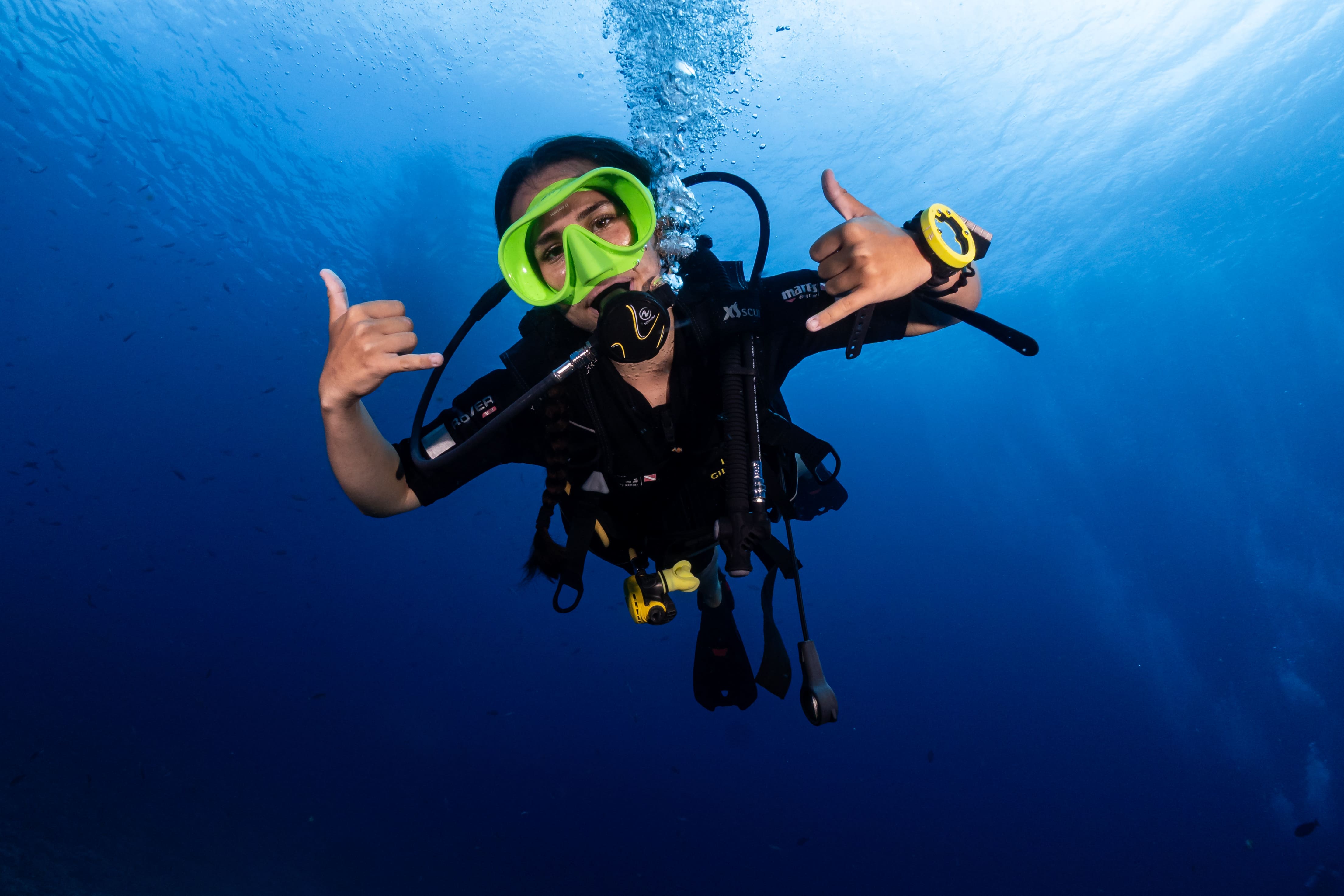
Best time to dive Gili Air and Gili Trawangan: a season-by-season guide

The short answer is that the Gili Islands are diveable year-round. Water temperatures rarely drop below 27°C, and the reefs around Gili Trawangan, Gili Air, and Gili Meno hold healthy marine life in every month of the calendar. That said, conditions do shift with the seasons, and knowing what to expect can help you plan a trip around what matters most to you, whether that's maximum visibility, calmer seas, or a shot at seeing manta rays.
Dry season: April to November
This is generally considered the best overall window for diving in the Gilis. Rainfall drops off, seas tend to be calmer, and visibility is typically at its clearest, often reaching 20 to 30 meters on a good day. It's also the busiest tourist season on the islands, so dive centers and boats are running at full capacity and courses are easy to book, though it's worth reserving a few days ahead during the July–August peak.
Water temperature: 27–29°C
Typical visibility: 20–30m
Good for: First-time divers, underwater photography, courses that depend on clear conditions for training dives
Wet season: December to March
Rain becomes more frequent, and visibility can vary more from week to week depending on runoff and swell, but the water is at its warmest and this window overlaps with the best chance of encountering manta rays in the channel between Gili Trawangan and Gili Meno. Rain showers are usually short and don't typically cancel diving; conditions are assessed day by day by local dive teams.
Water temperature: 28–30°C
Typical visibility: 10–20m, more variable
Good for: Warmer water, manta ray season, fewer crowds on the boats
Manta ray season: January to March
If seeing a manta ray is high on your list, this three-month window is when local dive centres report the most consistent sightings, driven by seasonal currents that bring plankton-rich water into the channel. Sightings still aren't guaranteed on any single dive, dive teams track conditions daily and plan the day's sites accordingly, but this is the period to plan around if mantas are the priority.
Currents and tides
Currents around the Gilis are driven more by the tide cycle than by season, which is why the same site can feel calm in the morning and have a noticeable drift by afternoon. Local dive guides plan which sites to run, and at what time of day, based on the day's tide chart rather than a fixed weekly schedule. This is one of the clearest advantages of diving with a local team who dive these reefs daily, rather than following a generic itinerary.
Choosing your trip dates
- Want the clearest water and calmest seas? Aim for April to November, ideally outside the July–August peak if you'd rather avoid crowds
- Want the warmest water and don't mind occasional rain? December to March works well
- Chasing manta rays specifically? Book January to March and build in a few flexible days
- Taking a course that depends on calm, clear conditions? Dry season generally offers the most predictable training environment
Any month, the reefs deliver
Whichever season you visit, turtles, reef sharks, and healthy coral are a near-constant around the Gili Islands. Get in touch before your trip and we'll help you plan your dive days around the current conditions, the tide charts, and whatever's on your list to see.