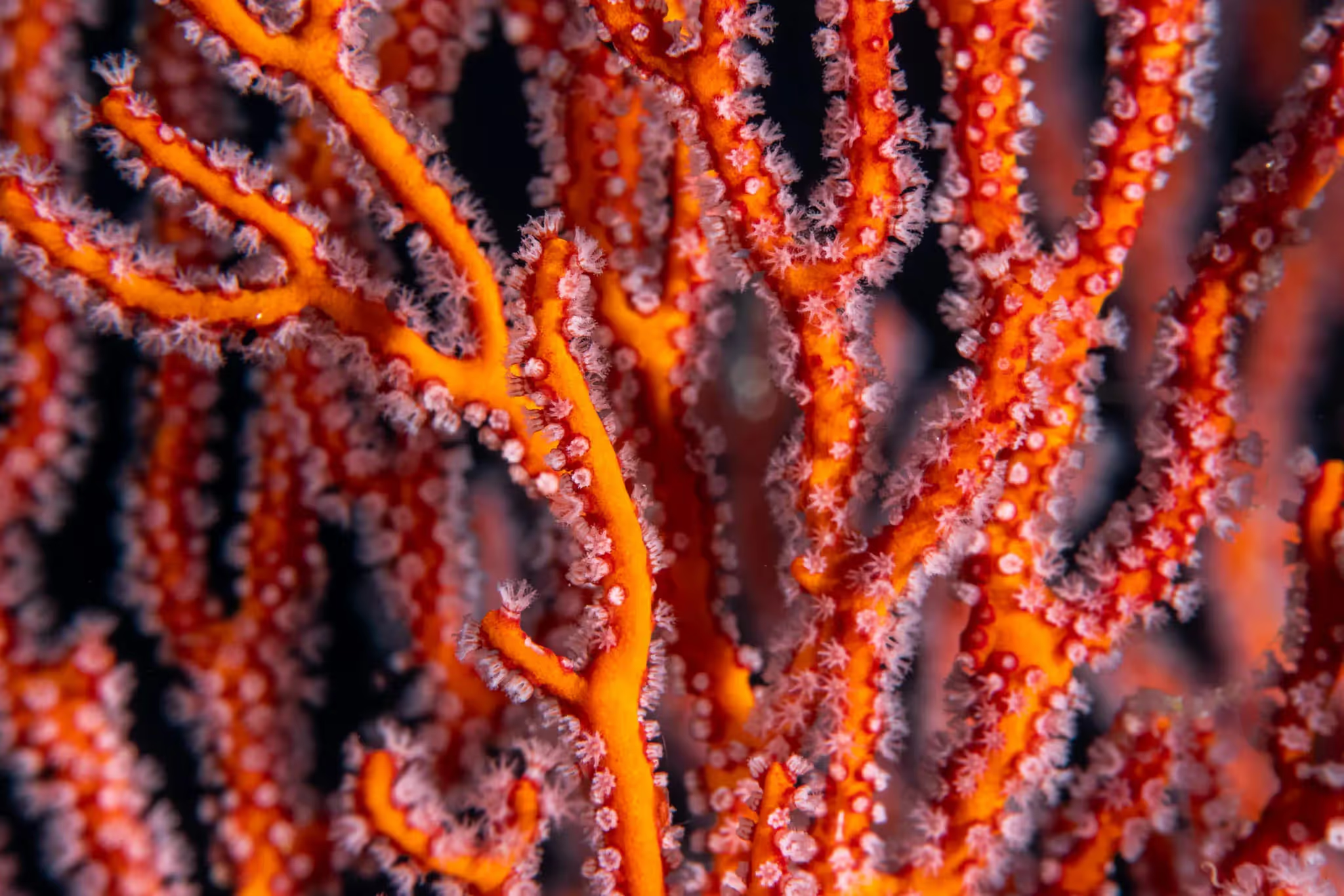

Ocean Quest Coral Propagation
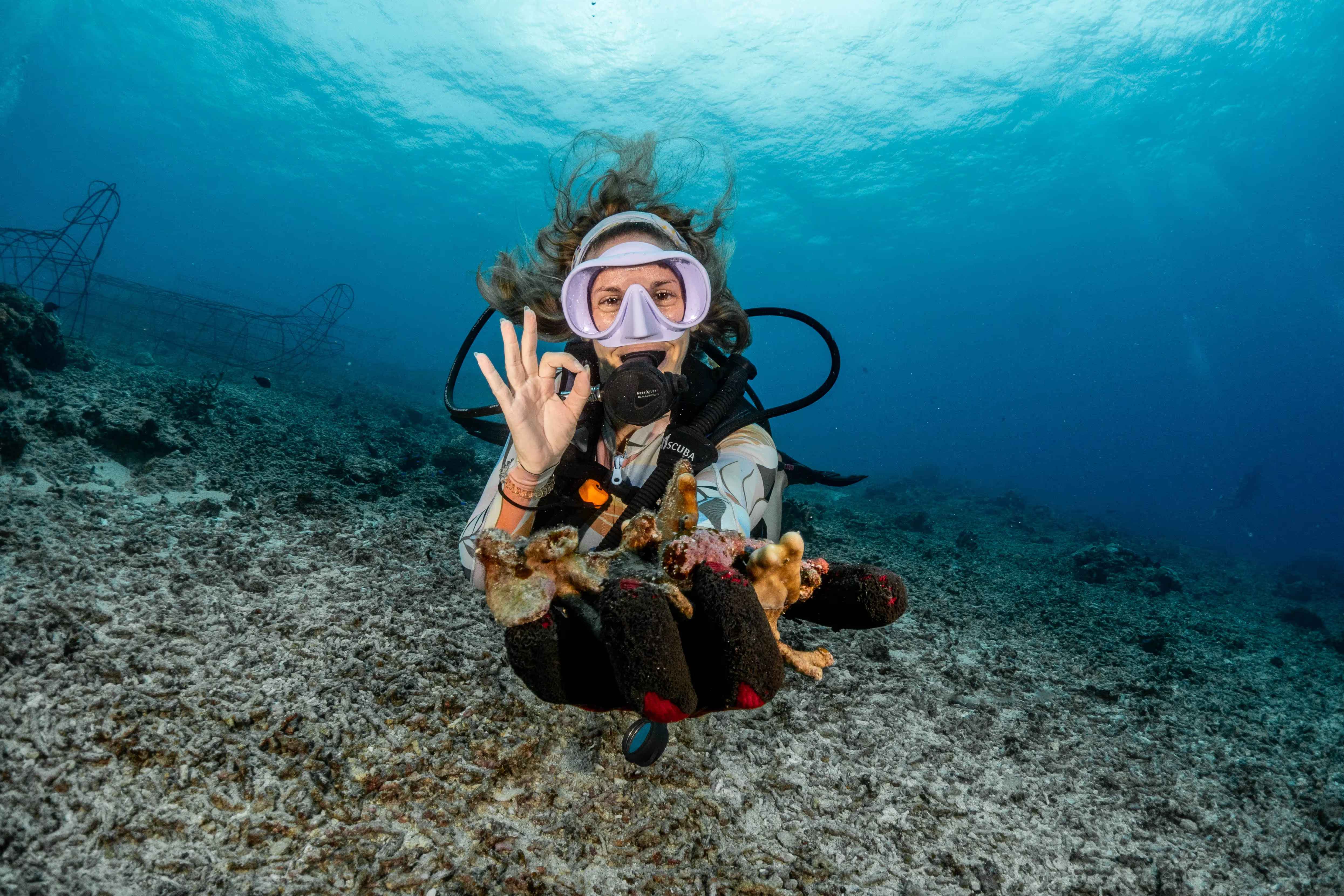
This course begins with a theoretical immersion, where you will discover the basics of coral biology and learn to identify them. During our dives, we collect pieces of live rock as well as fragments of corals that have naturally or accidentally detached. Once back on dry land, we proceed with coral propagation! Once fragmented and secured to the live rock, these corals are placed in a nursery where they can safely grow until they are ready to be reintegrated into the reef.
Course Details
The Ocean Quest Coral Propagation course teaches you how to propagate coral fragments in a natural and non destructive method. Our program is meticulously crafted to provide students with a comprehensive understanding of coral propagation techniques and their crucial role in marine ecosystem preservation. Whether you're an avid diver, marine enthusiast, or conservation advocate, this course offers a unique opportunity to contribute meaningfully to the protection and restoration of our oceans' fragile ecosystems.
Theoretical Immersion
Ocean Quest Coral Propagation teaches students the important of corals, their biology and how hard corals produce their calcium carbonate skeleton. Once understanding how corals grow and reproduce, we can begin to explore ways to protect and help coral reefs regenerate.
Going through the equipment needed and step by step process of coral propagation ensures we can perform this activity while generating the least amount of stress possible to these fragile coral fragments.
It is also important to learn how to assess if an area is suitable for a coral propagation nursery, how to maintain and redistribute corals onto the reef.
Once you have gained all this knowledge, coral propagation can begin!
Collecting Pieces
Ocean quest believes in natural propagation, meaning coral pieces are not harvest from healthy corals. Small fragments which have been previously broken off are rescued from the reef ready for propagation. These are collected from the reef close to the nursery to protect the biodiversity and not risk introducing a new species into an area it has not naturally entered.
Pieces of coral that have broken off due to human activity or natural disasters are already in a fragile state. They are collected extremely carefully and brought to the surface slowly, remaining in a volume of water the entire time. Coral pieces are then brought to the shore, where propagation can begin!
Coral Propagation
After the theory, students will understand the biology of corals and begin to be able to identify polyps and corallites. Ocean quest coral propagation cuts the rescued pieces of corals into tiny fragments around 10 polyps or less. By cutting these pieces into tiny fragments, these corals behave like babies, putting more energy into growing faster!
Sticking these tiny coral pieces onto live rock gives them the stability they need to grow once placed into the nursery!
Schedule
Day 1
Dive into Coral propagation theory, understanding the calcification of the hard coral skeleton, identifying different corals and learning the coral propagation method and which materials are needed!
In the afternoon, enjoy a dive to visit the nursery, observe existing coral fragments from previous coral propagation and gather substrate for the next day!
Day 2
During the morning, students dive to collect broken fragments of coral and the substrate collected the previous day.
Bring corals and substrate onto the shore for Propagation on the beach!
Dive to plant the fragments in the nursery so they can grow big and strong!
Day 3
Go over Knowledge reviews to reinforce coral propagation theory
Dive at the nursery to check on the coral babies!
February
- Preparation - 4th-5th
- ITC - 6th-15th
- IE - 18th-19th
March
- Preparation - 4th-5th
- ITC - 6th-15th
- IE - 18th-19th
April
- Preparation - 4th-5th
- ITC - 6th-15th
- IE - 18th-19th
June
- Preparation - 4th-5th
- ITC - 6th-15th
- IE - 18th-19th
July
- Preparation - 4th-5th
- ITC - 6th-15th
- IE - 18th-19th
August
- Preparation - 4th-5th
- ITC - 6th-15th
- IE - 18th-19th
August
- Preparation - 4th-5th
- ITC - 6th-15th
- IE - 18th-19th
September
- Preparation - 4th-5th
- ITC - 6th-15th
- IE - 18th-19th
October
- Preparation - 4th-5th
- ITC - 6th-15th
- IE - 18th-19th
November
- Preparation - 4th-5th
- ITC - 6th-15th
- IE - 18th-19th
Ocean Quest Coral Propagation

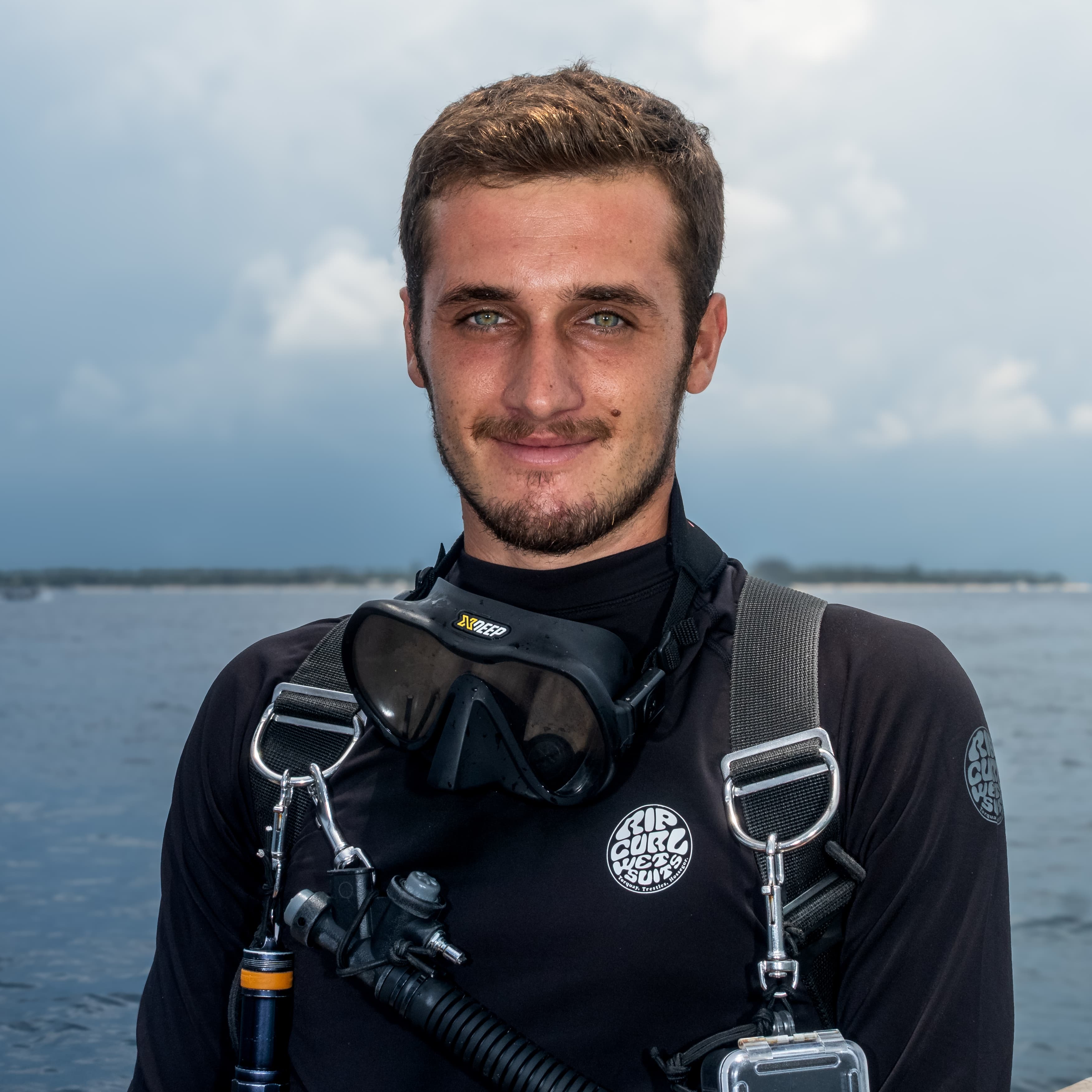
Meet Sergi
Meet our Instructor Trainer Sergi, the person in charge of our Professional Department, the largest in Indonesia.
Originally from Barcelona, Sergi left a career in Engineering to explore the world and its wonders. It didn’t take long for Sergi to fall in love with scuba diving and pursue it professionally.
Sergi started his professional diving career in Koh Tao, where he gained invaluable experience as an Instructor and Dive Centre Manager, for one of the largest SSI dive centers in South East Asia, before joining our team at Gili Divers.
After years of teaching and certifying over 1,000 students, he decided to share that experience and help shape the next generation of instructors. Besides his leadership in our professional programs, Sergi is also a Technical Diving Instructor.
His attention to detail and pursuit of excellence have become key in the successful training of his students. He is extremely passionate and possibly one of the most patient and calmest instructors out there, making sure you will retain the theory, gain the skills and grow the confidence needed to be a successful instructor, as well as, excell at your Instructor Evaluation. Sergi speaks fluent English, Spanish and Catalan.
Why dive with us?
A Friendly & Certified Team
Our team of certified instructors and guides is passionate about marine conservation and sharing the wonders of the Gili Islands Marine Park with you.
Tailored Courses for Every Level
From beginner courses to professional programs, we tailor each experience to your skill level and interests.
Dive in Comfort & Safety
Our state-of-the-art equipment and well-maintained boats ensure comfort and reliability throughout your dive.
Prime beach front location
Our prime beachfront location offers direct and easy access to dive sites around the Gili Islands.
What is Tech Diving?
Beyond its technical aspects, technical diving is an adventure that unlocks access to rare and uncharted sites, offering an unparalleled experience for marine discovery enthusiasts and those seeking personal challenges.
Why Choose Technical Diving?
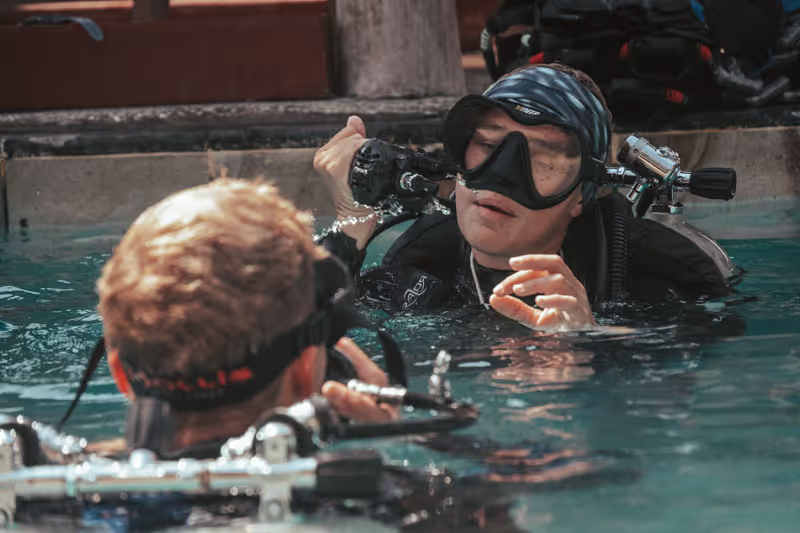
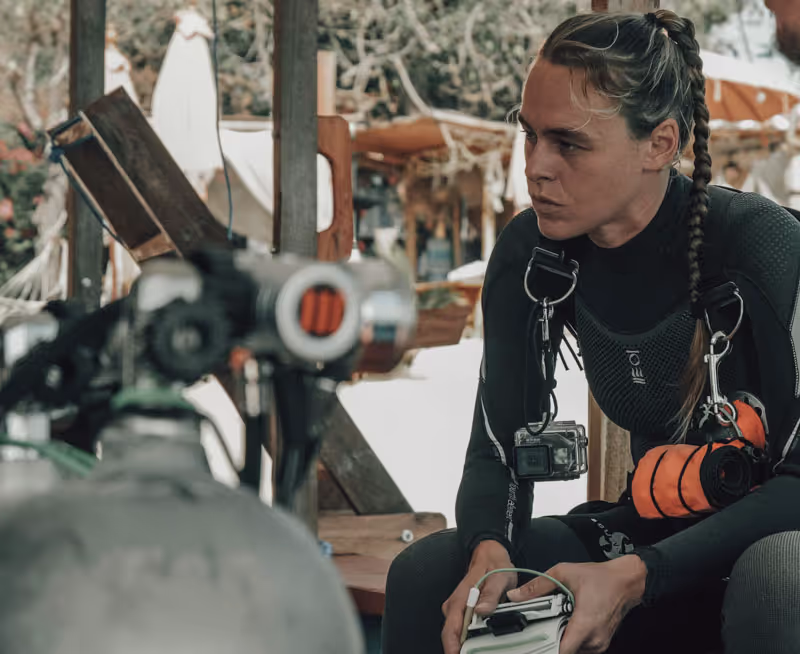
Meet Clem, our Technical Diving Instructor
From there, she expanded her teaching range with numerous specialties, alongside regularly leading fun and challenging technical dives. Over the years, she has gained invaluable experience teaching and diving in a wide variety of environments; from the cold, murky waters of the English Channel to the deep wrecks of the Maltese islands, and the vibrant marine life of Oman.
She joined Gili Divers in 2021 where she has taken on the task of growing a dedicated technical diving department. With a focus on personalised training, her main drive is always to create a safe and supportive teaching environment to encourage all divers to progress toward pushing their limits.
With a strong passion for deep diving and mentoring, she aims to empower students by giving them the confidence to achieve their diving goals. As a JJ-CCR Mod2 Mixed Gas diver, she enjoys exploring deep reefs and has a special love for historical wrecks.