How to log your first 20 dives in Gili Trawangan
Getting your Open Water certification is a huge milestone, but it’s only the beginning of your journey as a diver. What truly shapes you underwater are not the exams or the final dive of your course, but the dives that come after. Your first 20 logged dives are where everything starts to make sense. Buoyancy becomes more intuitive, breathing slows down naturally, and confidence slowly replaces hesitation.
If you’re looking for the best place to gain experience after certification, Gili Trawangan stands out as one of the most beginner-friendly diving destinations in Indonesia. Calm conditions, short boat rides, diverse dive sites, and a strong dive community make it an ideal environment to build solid foundations while actually enjoying every dive.
This article explains how to log your first 20 dives in Gili Trawangan, why those dives are so important, and how to turn simple experience into real progress.
Why the first 20 dives are more important than you think
Many new divers assume that once they are certified, they are “ready”. In reality, certification means you have learned the basics safely, not that you have mastered them. The first 20 dives are where diving stops feeling technical and starts feeling natural. During this phase, you are training your body and your mind at the same time. You learn how your breathing affects your buoyancy, how your body position changes your trim, and how to remain calm when something feels unfamiliar. These lessons cannot be rushed, and they cannot be learned from theory alone. This is also the stage where bad habits can form if dives are done without structure or awareness. Logging your dives properly helps you reflect, improve, and avoid repeating the same mistakes.
Why Gili Trawangan is the perfect place to build experience
Gili Trawangan offers conditions that are extremely forgiving for newly certified divers. The water is warm year-round, visibility is often excellent, and most dive sites feature gentle slopes rather than abrupt drop-offs. Boat rides rarely exceed ten minutes, which means less fatigue and more focus on the dive itself. Another major advantage is variety. Around the island, you can experience shallow reef dives, slightly deeper profiles, mild drift conditions, and different coral structures without ever being pushed beyond your comfort zone. This allows you to build experience progressively instead of jumping straight into challenging environments. For divers who completed their certification recently, this environment makes it much easier to reinforce what they learned during their Open Water course.
What logging a dive really means
Logging a dive is often misunderstood as simply writing down a number and a depth. In reality, your logbook is a learning tool. It records not only where you dove, but how you felt, what you practiced, and what you learned. A well-kept log allows you to notice patterns over time. You might realise that your air consumption improves after dive ten, or that buoyancy feels easier on certain types of sites. These insights help you progress faster and prepare you for future training, such as Advanced courses or specialties. Whether you choose a traditional paper logbook or a digital app matters less than consistency. What matters is taking a few minutes after each dive to reflect and write.
How to approach your first 20 dives the smart way
Instead of trying to accumulate dives as quickly as possible, it’s far more effective to think in terms of progression. The first few dives after certification should focus on comfort. You are reinforcing basic skills such as controlled descents, mask clearing, air checks, and buddy communication. At this stage, dives remain relatively shallow and familiar, which allows you to relax and focus on technique rather than surroundings. As you gain confidence, usually around dive six or seven, things start to click. Buoyancy becomes more stable, movements are more controlled, and your breathing naturally slows down. This is often when divers start enjoying the dive itself instead of concentrating on every action. Later, as you approach your fifteenth dive, adding variety becomes important. Slightly deeper dives, mild drift conditions, or different reef layouts help you adapt without overwhelming you. By the time you reach dive twenty, you should feel comfortable enough to think about refining details rather than simply managing the dive.
What to write in your logbook after each dive
To make your logbook truly useful, it helps to go beyond basic information. After each dive, take a moment to note how the dive felt. Was your buoyancy easier than the last time? Did you feel more relaxed? Was something challenging? Writing even a few sentences about your experience helps turn dives into lessons. Over time, these reflections become incredibly valuable, especially if you plan to continue training or simply want to understand your own progression. Logging is not about perfection. It’s about awareness.
Skill progression happens underwater, not on paper
One of the biggest mistakes new divers make is focusing only on sites and marine life, while ignoring skill development. Your first 20 dives are where habits are built. How you hover, how you position your body, how often you check your air, all of this becomes automatic during this phase. In Gili Trawangan, the calm conditions make it easier to focus on these details without stress. This is one of the reasons so many instructors recommend gaining experience here after certification.
Diving frequency: more Is not always better
While it can be tempting to dive as much as possible, especially in a destination like Gili Trawangan, quality matters more than quantity. Diving once or twice per day with enough rest in between allows your body and mind to process what you’re learning. Spacing dives properly helps you stay focused, avoid fatigue, and enjoy the experience more. It also gives you time to review your logbook, ask questions, and mentally prepare for the next dive.
Choosing the right dive center for your first 20 dives
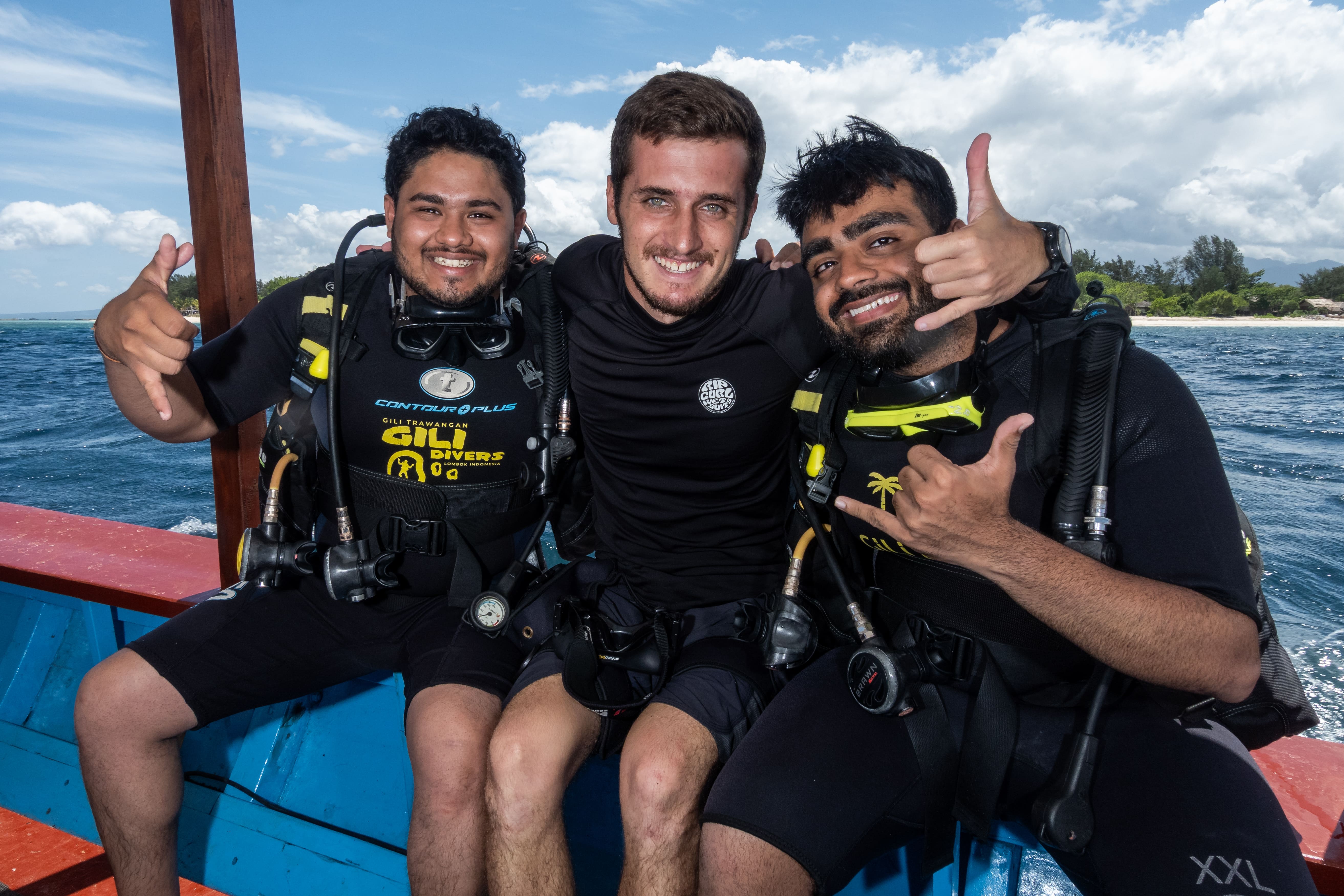
Who you dive with during this phase matters enormously. Diving with experienced instructors or guides who understand beginner progression can make the difference between simply accumulating dives and actually improving as a diver. At Gili Divers, newly certified divers benefit from small groups, patient supervision, and dive planning adapted to experience level. The focus is not on pushing limits, but on building confidence and good habits from the start. This approach is especially valuable when logging your first dives, as it reinforces correct techniques early on.
Environmental awareness starts with your first logged dives
Your first 20 dives are also where you learn how to interact responsibly with the ocean. Good buoyancy, fin awareness, and respectful distance from marine life are skills that develop over time. Using your logbook to reflect on environmental interactions helps you become a more conscious diver. This awareness not only protects reefs, but also improves your control and confidence underwater.
Why these first 20 dives shape your entire diving future
Every experienced diver remembers their first dives. Not because they were perfect, but because they were formative. The habits you build, the confidence you gain, and the mindset you develop during your first 20 dives will follow you throughout your diving life. By logging them properly, diving in a supportive environment like Gili Trawangan, and focusing on progression rather than numbers, you set yourself up for years of safe and enjoyable diving.
Ready to start logging dives that actually matter?
If you’ve just completed your Open Water certification — or are planning to — there’s no better place to build experience than the Gili Islands. Calm conditions, beautiful reefs, and professional guidance make it the perfect setting to log your first 20 dives the right way.
📩 Contact Gili Divers today and start turning your first dives into real confidence underwater.